
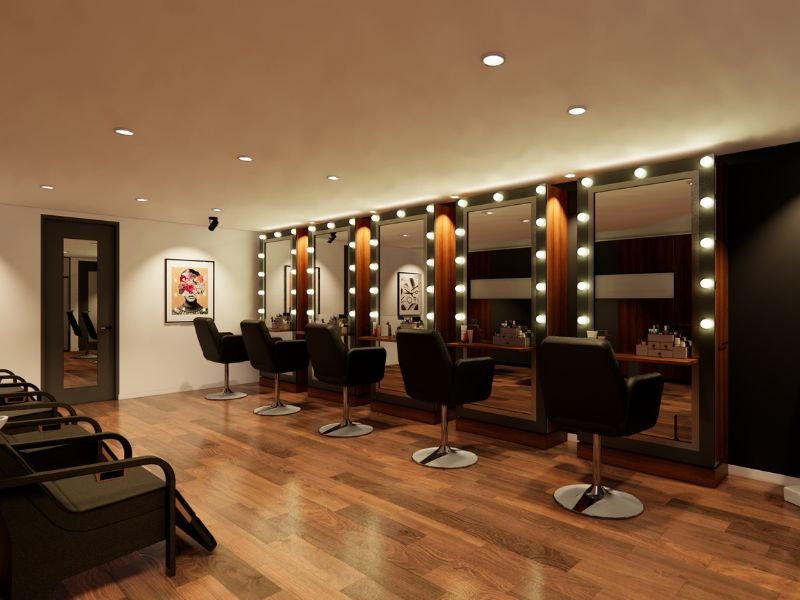
Walk into a salon, and the ceiling lighting is often one of the first things you notice, even if you don’t consciously realise it. The right salon ceiling lights can make a space feel bright, spacious, luxurious, and welcoming, while poorly planned lighting can make even a beautifully designed salon feel harsh or uncomfortable.
But ceiling lighting isn’t only about aesthetics. It needs to provide enough illumination for stylists to work comfortably, complement mirror and task lighting, and create different moods across reception, styling, treatment, and waiting areas. This is why planning the right salon lighting design is about finding a balance between how the space looks and how it actually functions.
Why Ceiling Lighting Shapes a Salon’s Whole Ambience
Ceiling lighting creates the foundation for a salon’s overall lighting environment. It determines how evenly the space is illuminated and can influence whether the interiors feel open and energetic or warm and intimate.
For example, bright, evenly distributed downlights can work well in a contemporary salon with multiple styling stations. A luxury salon, on the other hand, may use concealed cove lighting, decorative pendants, and focused spotlights to create a softer and more layered atmosphere.
The key is to remember that ceiling lights don’t have to do everything. Mirror lighting and dedicated task lights should handle detailed work around styling stations, while ceiling fixtures provide general illumination and help tie the entire space together.
Popular Salon Ceiling Lighting Styles
There isn’t one ceiling fixture that works for every salon. Different lighting types create different effects, and combining them can often produce a much better result.
Recessed Downlights
Recessed downlights are one of the simplest choices for general salon illumination. Because the fixture sits inside the ceiling, they create a clean and unobtrusive appearance.
They’re particularly useful across cutting floors, circulation areas, and other spaces where you want consistent ambient lighting without making the ceiling visually busy.
False-Ceiling Cove Lighting
Cove lighting places the light source within or behind a ceiling detail, allowing light to bounce indirectly into the room.
This creates a softer glow and can make a false ceiling appear more layered and sophisticated. It works especially well in reception areas, waiting lounges, VIP rooms, and luxury salon interiors.
When considering false ceiling lights for salon interiors, cove lighting is a good option for ambience rather than detailed task illumination.
Magnetic Track Lighting Systems
Magnetic track systems offer greater flexibility because individual lights can be repositioned along the track.
This can be useful in salons where furniture layouts change over time. Spotlights can be directed towards individual styling stations, displays, artwork, or architectural features without having to redesign the entire ceiling.
Pendant Light Clusters
Pendant lights can act as a decorative feature as much as a source of illumination.
A cluster of pendants above the reception desk or in a waiting area can immediately add personality to the interior. Warmer colour temperatures generally work well here because these areas benefit from a more welcoming atmosphere.
COB Spotlights
COB spotlights provide concentrated illumination and are useful when you want to draw attention to a particular area.
They can work well above styling stations, product displays, or treatment areas where more focused light is required. High-CRI versions are particularly useful when colour accuracy matters.
LED Panel Lights
LED panels provide broad, even illumination and are a practical choice for larger open areas.
They can be useful in salons with larger floor plates where consistent brightness is more important than creating a highly decorative ceiling. They’re also worth considering for back-of-house or functional spaces.
Ceiling Lighting by Salon Zone
Different areas of a salon have different lighting requirements. Instead of using the same fixture throughout the entire space, divide the salon into zones and select lighting accordingly.
Reception & Waiting Area
This is where you can be more decorative. Pendant clusters, statement fixtures, or concealed cove lighting can create a warmer and more inviting first impression.
The lighting doesn’t necessarily need to be as bright as the cutting floor. The objective here is to make clients feel comfortable while reinforcing the salon’s brand identity.
Cutting Floor
The cutting floor needs consistent illumination so stylists can see clearly while working.
Recessed downlights and adjustable track spotlights can provide good general coverage. Make sure fixtures are positioned to minimise shadows on clients rather than simply filling every part of the ceiling with lights.
Colour & Treatment Area
Colouring requires particularly good light quality because stylists need to distinguish subtle differences in hair colour.
This is one area where higher-CRI ceiling lighting can be particularly valuable. It should also be paired with dedicated task or mirror lighting so that the stylist isn’t relying entirely on overhead fixtures.
Washing & Back-Wash Area
The washing area generally has more straightforward lighting requirements.
Functional recessed downlights or panels can provide sufficient illumination without making the area excessively bright. A slightly softer lighting environment can also make the washing experience feel more relaxing.
VIP or Bridal Room
This is an opportunity to layer lighting more creatively.
Cove lighting can provide soft ambient illumination while a decorative centrepiece adds visual interest. Adjustable spotlights can then provide additional illumination wherever detailed work is taking place.
Style vs. Function — Matching Ceiling Lights to Each Zone
The best salon ceiling light design combines different fixture types according to what each part of the salon needs.
| Ceiling Light Type | Best Zone | CRI / Brightness Guidance |
| Recessed downlights | Cutting floor, general areas | CRI 80+, medium-high brightness |
| False-ceiling cove lighting | Reception, VIP/bridal room | Warm white, low-medium ambient brightness |
| Magnetic track spotlights | Cutting & colour stations | CRI 90+, adjustable per chair |
| Pendant clusters | Reception, waiting lounge | Warm white, decorative, low-medium |
| COB spotlights | Colour/treatment area, styling stations | CRI 90+, high, tightly focused |
| LED panel lights | Large open floor areas, washing area | CRI 80+, even, high coverage |
The important thing is not to treat this table as a fixed formula. The final choice should depend on the salon’s size, ceiling height, interior finishes, natural light, layout, and the type of services being offered.
False Ceiling Design Ideas That Also Cut Electricity Bills
A well-designed false ceiling can improve the appearance of a salon, but it can also be used to make the lighting system more efficient.
Here are a few practical ways to approach it:
- Choose LED fixtures: LED lighting is generally a more efficient choice than older CFL or halogen fixtures and is well suited to salons that operate for long hours.
- Create separate lighting zones: Divide the ceiling into circuits so unused areas don’t need to remain fully illuminated throughout the day.
- Use cove lighting selectively: Cove lighting can create ambience without requiring every fixture in the salon to operate at full brightness.
- Consider efficient-rated fixtures: Where applicable, look for BEE-rated products and compare their energy performance before making a purchase.
- Use controls where useful: Dimmers, sensors, or scene controls can help manage lighting in areas such as waiting rooms and private spaces.
Mistakes to Avoid When Planning Salon Ceiling Lighting
Even good-quality fixtures can perform poorly if they’re installed without considering the overall layout.
Relying Only on Ceiling Lights
Ceiling fixtures provide general illumination, but they shouldn’t replace dedicated mirror or task lighting. Styling, makeup, colouring, and other detailed services require light from the right direction as well as sufficient brightness.
Using the Same Brightness Everywhere
A reception area doesn’t need to be lit exactly like a colour station. Using the same brightness throughout the salon can make relaxing areas feel unnecessarily harsh while leaving work areas inadequately lit.
Overcrowding the Ceiling
More fixtures don’t automatically mean better lighting. Too many downlights can create a cluttered ceiling and increase energy consumption without improving the overall experience.
Instead, focus on spacing, beam angles, mounting positions, and the actual furniture layout.
Ignoring Heat in Low False Ceilings
Low ceilings and enclosed false-ceiling spaces need careful fixture selection. Consider the fixture’s heat management and installation requirements before finalising the design.
Plan Your Salon’s Ceiling Lighting Layout
The best ceiling lights for salon interiors are selected as part of a complete lighting plan rather than purchased one fixture at a time.
Start by mapping the salon into zones, identifying where detailed work happens, and deciding where you want the lighting to make a design statement. Then consider ceiling height, natural daylight, mirror placement, furniture positioning, CRI, colour temperature, beam angles, and controls.
If you’re unsure where to start, a professional lighting layout can make the process much easier. Claro Lights can help architects, interior designers, and salon owners plan a lighting solution around the actual layout and requirements of the space.
A thoughtful lighting plan doesn’t just make a salon look better. It helps stylists work comfortably, makes clients feel more at ease, and ensures that the interiors look as good in everyday use as they did on the design board.
Frequently Asked Questions
Q. What type of ceiling light is best for a salon?
There isn’t one universal option. Recessed downlights work well for general illumination, track spotlights provide flexibility, COB spotlights offer focused lighting, and cove or pendant fixtures can add ambience. A combination usually works better than relying on one fixture type.
Q. Should salon ceiling lighting be warm or cool white?
It depends on the zone. Warm white can work well in reception and waiting areas, while neutral white is generally more suitable for work areas. Colour and treatment zones may benefit from higher-quality, neutral or daylight-oriented lighting where accurate colour perception is important.
Q. How many ceiling lights does a salon need?
The number depends on the salon’s size, ceiling height, fixture lumen output, layout, natural daylight, and required illumination levels. Instead of calculating fixtures based only on floor area, it’s better to create a lighting layout that considers the position and distribution of each fixture.
Q. What is false ceiling cove lighting?
Cove lighting is an indirect lighting technique where fixtures are concealed within a ceiling detail. The light is directed towards the ceiling or wall rather than directly into the room, creating a soft and diffused glow.
Q. Can I mix pendant lights with recessed downlights in a salon?
Yes. In fact, combining decorative pendants with recessed downlights can create a more layered lighting scheme. Pendants can become a feature over reception or waiting areas, while recessed fixtures provide the practical illumination needed throughout the salon.
Conclusion
Good salon lighting is about much more than filling a ceiling with bright fixtures. The right salon ceiling lights should support the work being done, complement the interiors, and create an experience that feels comfortable from the moment a client walks through the door.
By combining ambient, task, accent, and decorative lighting, salon owners and designers can create spaces that are both functional and visually memorable. The result is a lighting scheme that doesn’t just illuminate the salon — it becomes part of the experience.


