
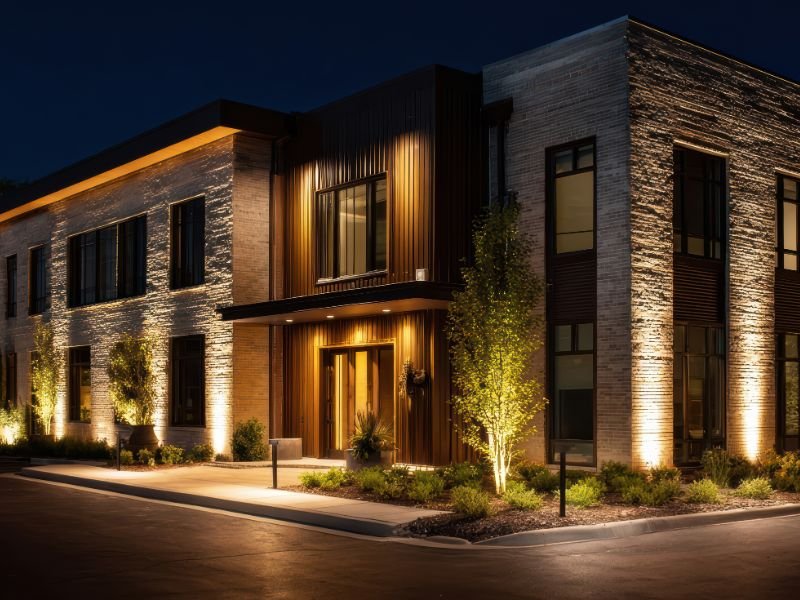
Lighting is no longer something that is added to an office after the interiors are finished. It has become an important part of how commercial spaces look, feel, and function. As workplaces become more flexible and design expectations continue to change, commercial lighting is moving towards solutions that are smarter, more comfortable, and more integrated with the architecture.
From human-centric systems and smart controls to minimalist linear fixtures, architectural lighting is playing a much bigger role in modern workplaces. At the same time, energy efficiency and employee wellbeing are pushing businesses to rethink traditional office lighting setups.
If you’re an architect, interior designer, facility manager, or business owner planning a new workspace or renovation, these are some of the key commercial lighting trends 2027 is likely to bring into focus.
Why Lighting Design Is a Bigger Priority for Commercial Spaces in 2027
Modern offices are expected to do more than simply provide a place to work. They need to support concentration, collaboration, comfort, wellbeing, and even the overall identity of a company.
The growing focus on wellness-oriented buildings, including frameworks such as the WELL Building Standard, has also brought greater attention to daylight and lighting quality. At the same time, hybrid work has changed what employees expect from an office. A well-designed workspace needs to offer an environment people actually want to return to.
Energy consumption is another major consideration. Replacing older fluorescent or CFL fixtures with efficient LED systems can help businesses reduce electricity consumption while improving light quality.
Good lighting can also make a noticeable difference to how a workspace feels. The right brightness, colour temperature, glare control, and distribution can create an environment that is easier to work in and more comfortable throughout the day.
8 Architectural & Commercial Lighting Trends to Watch
1. Human-Centric and Circadian Lighting
One of the biggest shifts in commercial office lighting is the move towards lighting that responds to the natural rhythm of the day.
Tunable systems can change colour temperature and intensity throughout the day, creating cooler, brighter conditions during focused working hours and warmer lighting later in the day. This approach is increasingly being considered in offices where employee comfort and wellbeing are priorities.
2. Integrated Smart Lighting & IoT Controls
Smart lighting is moving beyond simply switching lights on and off.
Sensors and connected controls can adjust lighting based on occupancy, available daylight, time of day, or specific room requirements. In a large office, this can help avoid wasting energy in spaces that aren’t being used while giving facility teams greater control over the lighting system.
For larger buildings, smart controls can become an important part of commercial led lighting design, particularly when energy management is a major consideration.
3. Minimalist Linear & Architectural Cove Lighting
The fixture itself doesn’t always need to be the focus.
Linear lighting and concealed cove systems allow designers to create clean lines of illumination while keeping the light source visually discreet. These solutions work particularly well in corridors, reception areas, meeting spaces, ceilings, and other areas where a minimal aesthetic is desired.
This is where architectural lighting can become part of the interior rather than looking like a separate installation.
4. High-CRI Task Lighting for Hybrid Workspaces
With employees spending more time between laptops, documents, design work, and video calls, lighting quality at the workstation matters.
High-CRI lighting can provide more accurate colour rendering, making surfaces, materials, and objects appear more natural. It can be particularly useful in design studios, creative workspaces, product environments, and areas where visual accuracy is important.
Instead of simply asking whether a fixture is bright enough, modern office lighting design ideas increasingly consider how accurately and comfortably that light performs.
5. Energy-Efficient LED Retrofits
For businesses operating in older buildings, completely redesigning the lighting system isn’t always necessary.
LED retrofits can replace inefficient fluorescent or CFL installations while improving efficiency, maintenance requirements, and lighting quality. Businesses can also evaluate fixtures based on energy performance and applicable BEE efficiency ratings when selecting products.
For facility managers, this makes LED retrofits one of the more practical commercial lighting trends 2027 is likely to continue building on.
6. Biophilic Lighting Design
Biophilic design is usually associated with plants, natural materials, and daylight, but lighting plays an important supporting role too.
Layering natural light with carefully positioned artificial lighting can help create a workspace that feels more comfortable and connected to the outdoors. Soft accent lighting around greenery, daylight-responsive systems, and warmer lighting in relaxation areas can all contribute to this approach.
The goal isn’t simply to add more light, but to create a more balanced environment.
7. Statement Architectural Lighting in Lobbies and Atriums
The reception area is often the first part of an office a visitor sees, which makes it an important opportunity for design.
Large pendants, sculptural installations, illuminated ceilings, and custom fixtures can turn lighting into a visual feature. In corporate offices, this can also reinforce brand identity and create a stronger first impression.
Here, architectural lighting becomes both functional and decorative.
8. Tunable White and Dynamic Colour-Changing Systems
Commercial spaces increasingly need to serve more than one purpose.
A conference room might be used for presentations in the morning, team meetings in the afternoon, and an event in the evening. Tunable white and dynamic colour-changing systems allow the lighting environment to be adjusted according to the activity.
Instead of installing separate lighting systems for every scenario, one flexible system can create different lighting scenes when required.
Commercial Lighting Trends at a Glance
Here’s a quick comparison of the major trends and where they make the most sense:
| Trend | Key Benefit | Best For |
| Circadian / human-centric lighting | Supports focus and wellbeing throughout the day | Corporate offices, co-working spaces |
| Smart lighting & IoT controls | Energy savings and occupancy-based automation | Large offices, multi-tenant buildings |
| Linear & cove architectural lighting | Clean, source-concealed ambience | Lobbies, corridors, reception areas |
| High-CRI task lighting | Accurate colour for screens and detailed work | Hybrid workstations, design studios |
| Energy-efficient LED retrofits | Lower electricity consumption and improved efficiency | Spaces still using CFL/fluorescent lighting |
| Biophilic lighting design | Creates a calmer, more natural-feeling workspace | Wellness-focused offices, hospitality |
| Statement lobby lighting | Reinforces brand identity at first impression | Corporate HQs, hotel lobbies |
| Tunable white / colour-changing systems | Multiple lighting scenes from one system | Event, conference, and multi-use spaces |
Planning a Commercial Lighting Upgrade — A Simple Checklist
Before selecting fixtures, it helps to look at the entire lighting system rather than choosing products individually.
Use this checklist when planning a new installation or retrofit:
- Audit the existing lighting: Check current fixtures for wattage, CRI, efficiency, age, and applicable BEE ratings.
- Map lighting zones: Separate areas according to how they are used — workstations, meeting rooms, corridors, reception, breakout areas, and other spaces.
- Consider smart controls carefully: Sensors and automation can add genuine value, but not every room needs an advanced control system.
- Separate fixture budgets: Architectural elements such as linear and cove lighting may need a different budget from standard task or ambient lighting.
- Plan before ordering: Get a proper lighting layout and understand the required light levels, beam angles, mounting positions, and circuiting before purchasing fixtures.
A good lighting plan can prevent expensive changes later and ensure that the selected fixtures actually work together as a complete system.
Working With an Architectural Lighting Partner
Choosing the right fixture is only one part of designing effective commercial lighting. The positioning, spacing, beam angle, colour temperature, controls, and overall lighting levels all need to work together.
For architects, interior designers, and facility managers, working with an experienced lighting partner can make this process much easier. Claro Lights can assist with commercial lighting layouts and product recommendations based on the requirements of the space.
Whether you’re designing a new office, upgrading an existing workspace, or planning a larger commercial project, the right lighting strategy can improve both the visual character and everyday usability of the space.
Frequently Asked Questions
Q. What is the biggest commercial lighting trend for 2027?
Human-centric lighting, smart controls, and flexible LED systems are among the key directions. Rather than focusing only on brightness, modern systems increasingly consider wellbeing, energy efficiency, automation, and flexibility.
Q. What CRI is recommended for office lighting?
A CRI of 80 or above is generally suitable for many standard office environments. For spaces where accurate colour representation is particularly important, such as design studios or creative workspaces, higher-CRI lighting can be a better choice.
Q. Is smart lighting worth it for a commercial office?
It can be, particularly in larger offices. Occupancy sensors, daylight harvesting, scheduling, and centralised controls can help manage energy use and provide greater flexibility. The value depends on the size and requirements of the building.
Q. What’s the difference between architectural lighting and commercial lighting?
Architectural lighting focuses heavily on integrating light with the design and architecture of a space, often using concealed, linear, recessed, or feature lighting. Commercial lighting is a broader category covering lighting systems used in offices, retail spaces, hospitality, institutions, and other commercial environments.
Q. How often should commercial LED lighting be upgraded?
There isn’t a fixed upgrade interval. Businesses should evaluate their system based on fixture condition, energy consumption, maintenance costs, light quality, controls, and changing requirements. If an older installation is becoming inefficient or difficult to maintain, an LED upgrade may make sense before the fixtures reach the end of their useful life.
Conclusion
The future of commercial lighting isn’t simply about brighter offices or more energy-efficient fixtures. It’s about creating spaces where lighting works alongside architecture, technology, and the people using the building.
From circadian systems and smart controls to concealed linear lighting and high-CRI task illumination, the direction is clearly moving towards lighting that is more flexible, efficient, and purposeful.
For businesses and design professionals planning their next commercial project, understanding these trends early can help create spaces that remain functional and relevant well beyond 2027.


