
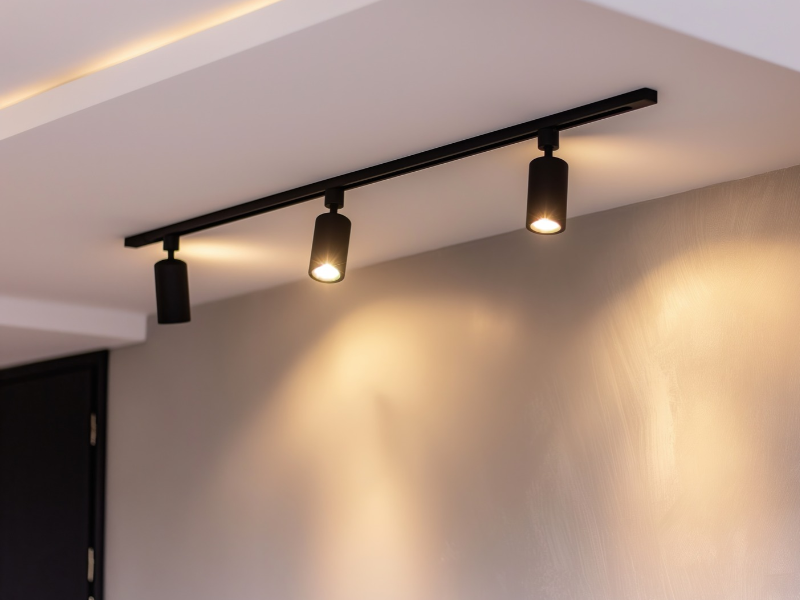
Magnetic track lights are quickly becoming the go-to choice for people who want flexible, modern lighting without the bulk of traditional fixtures. If you have ever wished you could move a spotlight to a new spot without calling an electrician, magnetic track lighting is built for exactly that. In this guide, you will learn what magnetic track lights are, why they are worth considering, how they compare with normal track lights, and how magnetic track lights installation works, step by step.
What Are Magnetic Track Lights?
Magnetic track lights are a modular lighting system made of a slim rail (the track) and lighting modules that attach to it using magnets. The rail carries low-voltage DC power, usually 48V, supplied through a separate driver (power supply). When you snap a fixture onto the rail, the magnetic contacts connect it to power and hold it in place.
Because the system runs on extra-low voltage, the fixtures themselves are slim and light. This is also why magnetic track lighting looks so clean in modern interiors.
Common Types of Magnetic Track Fixtures
Most systems offer a mix of modules that you can combine on one rail:
- Spotlights and downlights for focused accent and task lighting
- Linear and grille lights for soft, even illumination
- Flood and wall-wash modules to light walls, shelves, or artwork
- Pendant modules for a decorative touch over tables and counters
Rails come in recessed versions (sunk into a false ceiling or plaster) and surface-mounted versions (fixed directly to the ceiling or wall).
Key Benefits of Magnetic Track Lights
1. Easy to Rearrange
Fixtures can be moved or swapped along the rail by hand. If you rearrange furniture or change a display, your lighting can change with it.
2. A Sleek, Minimal Look
The thin rail and compact modules suit contemporary homes, boutiques, offices, and cafes. Recessed rails almost disappear into the ceiling.
3. Low-Voltage Operation
The rail runs on low-voltage DC, which is generally considered safer to handle than mains-powered fittings. Even so, the driver connects to mains power, so that part of the job should always be done carefully.
4. Energy-Efficient LED Light
Most magnetic modules use LED sources, which draw far less power than older halogen spots. You can read more about efficient lighting practices on the Bureau of Energy Efficiency (BEE) website.
5. Flexible Layering
You can combine accent, ambient, and task lighting on a single track. That makes it easier to create the layered lighting that interior designers recommend.
Magnetic Track Lights for Home: Where They Work Best
Magnetic track lights for home use are popular in living rooms, kitchens, hallways, and home offices. A few ideas:
- Living room: Use a recessed rail along the TV wall or sofa area, with spotlights angled toward artwork.
- Kitchen: Add narrow beam modules above counters for clear task lighting.
- Bedroom: Choose warm white modules and dim them for a calm evening mood.
- Home office: Use adjustable spots to cut glare on your screen and desk.
If you are exploring options, see our residential lights and our dedicated magnetic lighting range.
Magnetic Track Lights vs Normal Track Lights
Both systems let you direct light along a rail, but they work differently. Here is a quick comparison of magnetic track lights vs normal track lights.
| Feature | Magnetic Track Lights | Normal Track Lights |
|---|---|---|
| Power | Low-voltage DC (typically 48V) via a driver | Often mains voltage through the track |
| Fixture attachment | Snap on with magnets | Twist or clamp into an adapter |
| Look | Slim, minimal, can be recessed | Bulkier, mostly surface-mounted |
| Flexibility | Very easy to move and swap | Moderate |
| Module variety | Spots, linear, pendants, flood | Mostly spots and spotlights |
| Upfront cost | Usually higher | Usually lower |
Normal track lights remain a sensible budget choice. Magnetic systems make more sense when you want a cleaner design and plan to adjust your lighting over time.
How to Choose the Best Magnetic Track Lights
The best magnetic track lights are the ones that suit your space and come from a reliable maker. Check these points before buying:
- Lumen output: Choose brightness based on room size and purpose, not wattage alone.
- Colour temperature: Warm white (about 3000K) feels cosy, neutral white (about 4000K) suits kitchens and offices, and cool white (about 6500K) suits work-focused areas.
- CRI (colour rendering index): A higher CRI shows colours more accurately, which matters in showrooms and retail displays.
- Beam angle: Narrow beams highlight objects, and wide beams light a whole area.
- Driver quality and rating: The driver should match the total load of your fixtures, with some spare capacity.
- Compatibility: Rails, connectors, and modules from different brands may not fit together, so buy from one system.
- Standards and warranty: Look for products that follow applicable BIS standards and offer a clear warranty.
How to Install Magnetic Track Lights
Magnetic track lights installation is straightforward when you plan ahead. Surface-mounted rails are simpler. Recessed rails need a ceiling cut-out, so they are best planned during a false ceiling or renovation project.
Safety first: The driver connects to mains electricity. Switch off the supply at the MCB before you start, and have a licensed electrician handle all mains wiring.
What You Will Need
- Magnetic track rail and end caps
- Power driver (matched to your total load)
- Connectors and suspension or mounting accessories
- Magnetic light modules
- Drill, screwdriver, measuring tape, and pencil
- Spirit level
Step-by-Step Installation
- Plan your layout. Mark where the rail will run and where you want light to fall. Keep the rail away from heat sources and make sure the driver can be placed within reach.
- Measure and cut the rail. Cut the rail to length if needed, using the manufacturer’s recommended method, and smooth any rough edges.
- Mount the rail. For surface mounting, fix the rail to the ceiling with screws or clips. For recessed installation, cut the opening in the false ceiling and secure the rail in the channel.
- Position the driver. Place the driver in a ventilated, accessible spot, such as above a false ceiling with a service hatch.
- Connect the power. Link the driver to the rail with the supplied connector. Have your electrician connect the driver to the mains supply.
- Attach the light modules. Snap each module onto the rail. The magnets hold them in position and complete the circuit.
- Test and adjust. Restore power, check that every module works, and fine-tune the beam direction.
For complex layouts or commercial projects, our lighting design team can help plan the rail positions and fixture mix.
A Real-Life Style Example (Illustrative)
Consider a typical 3-room apartment in Delhi with a living room that doubles as a dining area. Instead of fixing six separate spotlights, the owner installs one recessed magnetic rail along the ceiling. Three spot modules highlight a wall painting, two wash light across a bookshelf, and one pendant module hangs over the dining table. A year later, the owner moves the sofa and simply slides two spots to new positions. No ceiling work is needed.
This is an illustrative scenario, but it shows the main value of the system: your lighting can change as your space changes. The same idea works in boutiques and offices, where displays and layouts change often. You can see more of our commercial lights for such spaces.
Pros and Cons of Magnetic Track Lights
Pros
- Easy to adjust and reconfigure
- Slim, modern appearance
- Low-voltage rail
- Works for both homes and commercial spaces
- Wide choice of modules in one system
Cons
- Higher upfront cost than basic track lights
- Limited compatibility between brands
- Needs planning, especially for recessed rails
- The driver must be placed carefully and sized correctly
Frequently Asked Questions
Are magnetic track lights safe?
The rail typically runs on low-voltage DC, which is considered safer to touch than mains voltage. The driver still connects to mains power, so installation should follow proper electrical safety practice.
Can I install magnetic track lights myself?
You can attach modules and mount a surface rail yourself if you are comfortable with basic tools. The mains connection to the driver should be done by a licensed electrician.
How long can a magnetic track rail be?
Length depends on the system and the driver capacity. Rails are usually available in standard lengths and can be cut or joined, so check the manufacturer’s specifications.
Can I use magnetic track lights in a false ceiling?
Yes. Recessed rails are made for false ceilings and plaster ceilings. Plan the cut-out and driver access before the ceiling is finished.
Are magnetic track lights dimmable?
Many systems support dimming, but it depends on the driver and modules. Confirm dimming compatibility before you buy.
What is the difference between magnetic track lights and normal track lights?
Magnetic systems use low-voltage rails and snap-on modules for a slimmer look and easier changes, while normal track lights usually use mechanical adapters and are often bulkier.
Conclusion
Magnetic track lights give you flexible, stylish, and energy-efficient lighting that adapts as your space changes. They suit modern homes, retail showrooms, offices, and hospitality spaces, and they are easier to install than many people expect when you plan the layout and driver carefully.
Since 2012, CLARO Lights has been designing and manufacturing LED light fittings in Delhi for residential and commercial projects. Ready to light up your space? Explore our magnetic lighting range, contact our team, or message us on WhatsApp for a quote. Have a question about magnetic track lighting? Leave a comment below, and share this guide with someone planning a lighting upgrade.