
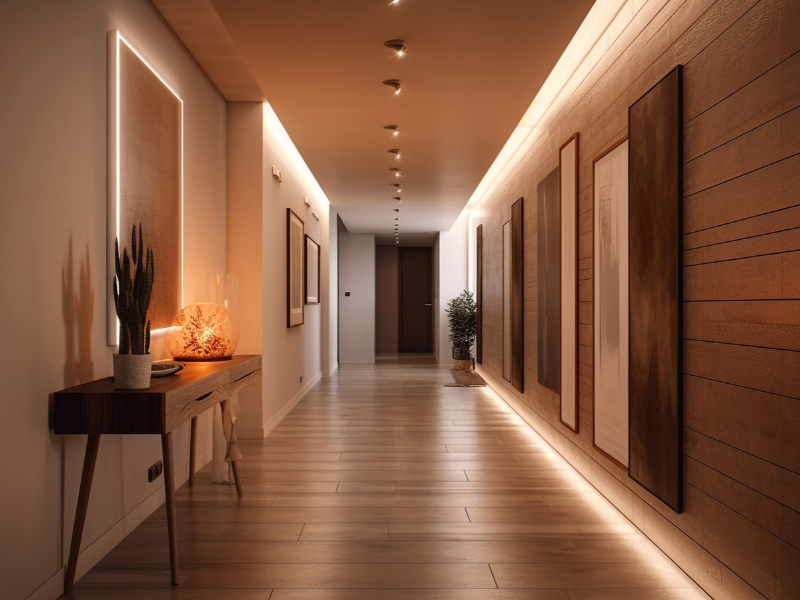
Lighting can completely change the way a home looks and feels. From creating a welcoming atmosphere in the living room to highlighting artwork or illuminating a kitchen counter, the right fixtures make everyday spaces more functional and visually appealing.
While traditional ceiling lights provide general illumination, modern homeowners increasingly explore flexible lighting solutions that allow them to direct light exactly where it is needed.
One such option is LED Track Lights for Home.
With their sleek appearance, adjustable fixtures, and versatile applications, LED track lights offer a practical combination of contemporary design and functional lighting. They can illuminate specific areas, highlight decorative features, or complement an existing lighting arrangement without requiring a separate ceiling fixture for every lighting point.
But are track lights suitable for every room? What are their main advantages? And what should homeowners understand before installation?
In this guide, we explore how LED track lighting works, its benefits, popular applications, important buying considerations, and the professional installation process to help you make an informed decision.
What Are LED Track Lights?
LED track lights are lighting fixtures mounted along a specially designed track or rail. The track provides the electrical connection, while compatible lighting heads can be positioned along it according to the system’s specifications.
Many track light heads can also be adjusted or rotated, allowing light to be directed towards particular areas or objects.
Unlike a conventional ceiling fixture with a fixed beam direction, track lighting offers greater flexibility in how a space is illuminated.
A typical track lighting system includes:
- A compatible track or rail.
- LED track light heads.
- Power-feed components.
- Track connectors, where required.
- Mounting accessories.
- Compatible drivers or power supplies, depending on the system.
Track lighting is available in different configurations, including surface-mounted, recessed, and magnetic track systems.
However, components are not universally interchangeable. Track heads, connectors, power supplies, and rails must be selected according to the manufacturer’s compatibility requirements.
Benefits of LED Track Lights for Home
LED track lighting offers several advantages for homeowners looking to combine modern aesthetics with practical illumination.
1. Flexible and Adjustable Lighting
One of the biggest advantages of track lighting is the ability to adjust the direction of individual fixtures.
Instead of illuminating the entire room uniformly, you can focus light on selected areas such as artwork, bookshelves, seating arrangements, or kitchen counters.
For example, a living room track system can include separate light heads directed towards a feature wall and a decorative display.
This flexibility is particularly useful when furniture arrangements or decorative elements change.
2. Contemporary and Minimalist Appearance
Track lighting is often associated with clean architectural lines and contemporary interiors.
Slim rails and compact lighting heads can complement modern homes without requiring elaborate decorative fixtures.
Black, white, and other available finishes can be selected to coordinate with ceiling colours, furniture, and architectural details.
3. Energy-Efficient Illumination
LED technology generally consumes significantly less electricity than traditional incandescent lighting while providing comparable useful illumination.
However, energy savings depend on the actual fixture specifications, wattage, operating hours, and the lighting system being replaced.
When comparing products, consider lumen output and luminous efficacy rather than assuming that every LED fixture performs identically.
4. Suitable for Accent and Task Lighting
LED track lights are particularly effective for directional lighting.
They can be used to highlight decorative objects, improve visibility over selected work surfaces, or introduce additional illumination in areas where general lighting is insufficient.
Choosing the correct beam angle is essential for achieving the intended effect.
5. Adaptable Lighting Arrangement
Depending on the track system, compatible heads may be repositioned or additional fixtures may be accommodated within the manufacturer’s specified electrical and mechanical limits.
This makes track lighting useful for spaces where the lighting arrangement may change over time.
However, homeowners should never exceed the track’s rated capacity or mix incompatible components.
6. Suitable for Different Residential Spaces
Track lights can work in living rooms, bedrooms, kitchens, hallways, and selected home office environments.
Their suitability depends on ceiling conditions, lighting requirements, installation feasibility, and the overall interior design.
Popular Types of LED Track Lighting
Before choosing track lights for home, it helps to understand the available system configurations.
Surface-Mounted Track Lights
These systems use a visible track installed on the ceiling or another manufacturer-approved mounting surface.
They are commonly considered when homeowners want a contemporary appearance without creating a recessed ceiling channel.
Recessed Track Lights
Recessed tracks are integrated into a suitably designed ceiling, creating a more streamlined architectural appearance.
They require careful coordination with the ceiling construction and should ideally be planned during renovation or interior execution.
Magnetic Track Lighting
Magnetic track systems use specially designed rails and compatible lighting modules.
Many operate through a dedicated low-voltage power supply, although specifications vary by manufacturer.
Their appearance and modular arrangement make them popular in contemporary interior design.
Important: Magnetic and conventional track lighting components should never be assumed to be interchangeable.
Where Can You Use LED Track Lights at Home?
Living Room
Track lighting can highlight artwork, textured walls, decorative shelving, and selected furniture arrangements.
For a balanced lighting scheme, combine directional track lights with suitable ambient lighting rather than relying exclusively on narrow spotlights.
Kitchen
Track lights can provide supplementary illumination over counters or selected working areas.
However, fixture positioning should minimise shadows and glare. Dedicated under-cabinet lighting may still be useful for food preparation.
Bedroom
In bedrooms, track lighting can highlight wardrobes, decorative walls, or reading corners.
Choose appropriate brightness, beam direction, and colour temperature to maintain a comfortable atmosphere.
Hallways and Corridors
A linear track arrangement can provide directional illumination along a corridor while highlighting photographs or artwork displayed on the walls.
Home Office
Adjustable track lights can supplement general lighting in a home office.
Avoid directing concentrated beams towards computer screens or reflective work surfaces, as this may create uncomfortable glare.
How to Choose the Right LED Track Lights for Home
Selecting the right product requires more than choosing an attractive design.
Consider the following factors before purchasing.
Colour Temperature
Warm white lighting around 2700K–3000K is often preferred for living rooms and bedrooms, while neutral white around 3500K–4000K may suit kitchens and multifunctional areas.
The ideal choice depends on your interior palette and intended atmosphere.
Brightness and Lumens
Lumens indicate the amount of visible light emitted by a fixture.
Choose brightness according to room size, ceiling height, fixture spacing, and lighting requirements.
Beam Angle
Narrower beams are generally suitable for focused accent lighting, while wider beams can illuminate larger surfaces.
The appropriate beam angle depends on the distance between the fixture and the target area.
Colour Rendering Index
Colour rendering influences how accurately objects and finishes appear under artificial lighting.
A CRI of 80 or above is commonly used for general residential applications, while higher colour-rendering performance may be desirable for artwork and colour-sensitive spaces.
Track Compatibility
Confirm that the track, lighting heads, connectors, and power supply belong to a compatible system.
Also check product warranties, electrical ratings, mounting requirements, and manufacturer documentation.
LED Track Light Installation: A Practical Guide
Understanding the installation process helps homeowners plan their lighting project and communicate requirements clearly with an electrician.
However, LED track light installation involves electrical work and should be performed by a qualified electrician in accordance with the product instructions and applicable electrical safety requirements.
The following is an overview of the professional installation process, not a DIY wiring guide.
Step 1: Plan the Lighting Layout
Identify the areas requiring illumination and decide where the track should be positioned.
Consider ceiling height, furniture placement, electrical access, and the intended direction of individual lighting heads.
Step 2: Select a Compatible Track System
Choose the appropriate track type and verify that all lighting heads, connectors, drivers, and mounting accessories are compatible.
For magnetic or other low-voltage systems, confirm the required power supply and its capacity.
Step 3: Assess the Ceiling and Electrical Supply
A qualified electrician should inspect the proposed installation location, mounting surface, available electrical supply, and any concealed services.
The ceiling must be suitable for securely supporting the system.
Step 4: Isolate and Verify the Electrical Supply
Before installation work begins, the electrician must safely isolate the relevant circuit and verify that it is de-energised using appropriate testing equipment.
Simply switching off a wall switch is not an adequate substitute for proper electrical isolation.
Step 5: Install the Track and Electrical Components
The electrician installs the track using the manufacturer-approved mounting method and completes the required electrical connections.
The exact process varies between conventional, recessed, magnetic, and other track systems.
Step 6: Fit Compatible LED Light Heads
Once the track is correctly installed, compatible lighting heads are fitted according to the manufacturer’s instructions.
Their positions and directions can then be adjusted within the system’s permitted limits.
Step 7: Test the Installation
Before the installation is handed over, the electrician should complete the appropriate safety and functional checks.
This includes verifying secure mounting, correct operation, and compatibility of the installed components.
Safety reminder: Do not attempt to modify wiring, connect incompatible fixtures, bypass protective devices, or exceed the manufacturer’s electrical ratings.
Common Mistakes to Avoid When Installing Track Lights
Even high-quality track lights may deliver disappointing results when the lighting layout is poorly planned.
Some common mistakes include:
- Installing too many spotlights in a small room.
- Selecting an unsuitable beam angle.
- Positioning fixtures where they create glare.
- Ignoring ceiling height and mounting requirements.
- Mixing incompatible track components.
- Choosing brightness based only on wattage.
- Overlooking the need for general ambient lighting.
A professional lighting plan should balance appearance, brightness, functionality, and visual comfort.
LED Track Lights vs Traditional Ceiling Lights
Both lighting options have advantages depending on their intended application.
| Feature | LED Track Lights | Traditional Ceiling Lights |
|---|---|---|
| Light Direction | Often adjustable | Usually fixed |
| Main Application | Accent and directional lighting | General illumination |
| Appearance | Contemporary and architectural | Varies by fixture design |
| Flexibility | Depends on track configuration | Usually requires repositioning the fixture |
| Installation | Requires compatible track components | Depends on fixture type |
| Best Use | Highlighting selected areas | Providing broad room illumination |
For many homes, combining track lighting with general ceiling illumination offers greater flexibility than relying exclusively on either option.
Practical Example: Track Lighting for a Modern Living Room
Consider a contemporary apartment with a living room featuring a textured television wall, artwork, and a separate reading corner.
Instead of installing identical ceiling lights throughout the room, the homeowner could consider a track lighting arrangement with adjustable fixtures.
One light head could highlight the artwork, another could illuminate the decorative wall, and a third could provide supplementary light near the reading area.
Warm white lighting could help maintain a welcoming atmosphere, while separate ambient fixtures provide comfortable general illumination.
The result would be a layered lighting arrangement that supports different activities without making the ceiling visually overcrowded.
This is an illustrative design example, not a claim about a completed installation.
Conclusion: Bring Flexibility and Modern Style to Your Home
LED track lights offer a versatile approach to residential lighting by combining directional illumination with contemporary design.
Whether you want to highlight artwork, brighten selected areas, or introduce a more architectural lighting arrangement, track systems can complement different interior styles.
However, successful lighting depends on careful product selection, appropriate brightness, suitable beam angles, and safe installation.
Before purchasing, consider your room layout, lighting requirements, ceiling conditions, and the compatibility of the selected components.
Frequently Asked Questions About LED Track Lights
1. Are LED track lights suitable for residential use?
Yes. LED track lights can be used in living rooms, bedrooms, kitchens, corridors, and other residential spaces when the fixtures and installation are suitable for the intended environment.
2. Do LED track lights consume more electricity?
Not necessarily. Electricity consumption depends on the combined wattage of the installed lighting heads and associated system components.
Compare product specifications to understand the expected energy consumption.
3. Can track lights replace regular ceiling lights?
They can contribute to general lighting when appropriately designed. However, directional track lights are often most effective when combined with other ambient lighting sources.
4. Can I install LED track lights without a false ceiling?
Yes. Surface-mounted track systems can be suitable for ceilings that do not have a false ceiling, provided the mounting surface and electrical arrangements meet installation requirements.
5. How many track lights are needed for a living room?
The number depends on room dimensions, ceiling height, beam angles, lumen output, and the areas requiring illumination.
A lighting layout should be developed according to these factors rather than selecting an arbitrary number of fixtures.
6. How to install LED track lights safely?
Installation should be handled by a qualified electrician using compatible components and the manufacturer’s instructions. The electrical supply must be safely isolated and verified before work begins.
7. Are magnetic track lights better than conventional track lights?
Neither system is universally better. Magnetic systems can offer a streamlined appearance and modular configurations, while conventional systems may suit different design requirements and budgets.
The best choice depends on compatibility, installation conditions, aesthetics, and lighting needs.


