Famously, beauty is in the eye of the beholder, but what if the beauty of your art doesn’t come through because of bad lighting? Whether you are curating paintings, sculptures, or mixed medium installations, Art Gallery Lighting will be an important factor that defines visitor experience. Light can make the works visible, but it also improves the depth, texture, colour, and atmosphere. Modern galleries play with lighting and its different applications to add character and depth.
Here is a guide where we will discuss some practical tips in Art Gallery Lighting so you can do justice to your artworks and enhance visitor experience.
Understanding Art Gallery Lighting Basics
In its most basic definition, the Art Gallery Lighting is all about controlled and purposeful lighting. As opposed to general lighting, Art Gallery Lighting should avoid interfering with the medium, surface and vulnerability of the artwork. Excess light may result in glare or fading, and insufficient light may conceal an image. The aim is to highlight the artwork and its different aspects without being obtrusive.
A thoughtful lighting design can make every work of art alive, specific and emotionally touching. It is all about layering the light, choosing the right colour temperature and placement.
Choosing the Best Track Lighting for Art Gallery Displays
Track lighting is one of the most useful tools in lighting a gallery. Track lighting works beautifully in art galleries because of its flexibility, simplicity, and adaptability.
Track lighting allows you to:
- Change angles with the change in layout or flow of space
- Focus light on specific pieces without spill
- Use movable heads to adapt installations
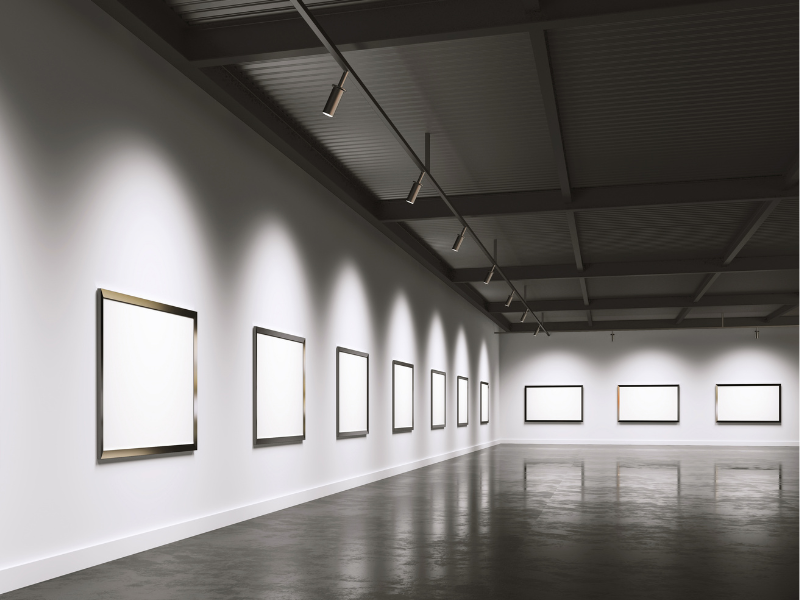
The best track lighting for art gallery is multi-purpose and blends in with the interiors and architectural design. They may be installed on the ceiling or embedded in the architectural coves and provide customised control functions that assist designers in building an immersive visual experience.
How Art Gallery LED Lighting Enhances Visual Experience
Art gallery LED lighting has been a saviour to modern galleries. LED technology delivers cleaner, more consistent light that preserves colour integrity and minimises heat emission, critical when displaying sensitive works. LEDs also support fine adjustments in intensity and control systems, enabling galleries to program scenes for different exhibitions or lighting moods.
The benefits of Art gallery LED lighting are:
- Energy efficiency – reduced consumption and cost of operation.
- Long life cycle – requires less maintenance and lasts longer than incandescent lights
- Precision – consistent light quality without the flicker.
Galleries that trust LED Lights for their art choose sustainability and user experience over cost.
Selecting the Right Art Gallery Lighting Fixtures for Every Piece
Art gallery lighting fixtures determine the way people see and experience the artwork. There are so many options of fixtures available in the market, from track lights to recessed lighting. The question arises, which one to use for your gallery?
Here are some examples art gallery lighting fixtures and their use:
- Adjustable spotlights – for focused highlights
- Linear tracks with movable heads – for dynamic layout changes
- Recessed or minimal fixtures – for a clean, unobtrusive look
Pro Tip: To choose the Best track lighting for art gallery, opt for clean and minimal designs that don’t fight for attention with your artwork. Make sure that your lighting doesn’t overshadow the artwork, but enhances it.
Tips for Using Color Temperature and Intensity
The art of Art Gallery Lighting involves the selection of appropriate colour temperature and light intensity. Too cold, and whites will be harsh; too hot, and colours will shift inaccurately.
Lighting designers often use:
- 3000K – warm, flattering light for traditional art
- 3500K–4000K – neutral light that preserves colour accuracy
- High CRI (90+) LED sources – to ensure true colour representation
Balancing colour temperature with intensity lets you create visual depth without damaging sensitive materials.
Combining Ambient and Accent Gallery Lighting Ideas
All the best galleries use layered lighting, mixing ambient illumination with art-focused accent lights. Ambient light provides a soft base level that supports navigation and general comfort. Accent lights direct attention, bringing texture, form, and contrast to selected pieces.
When planning Art Gallery Lighting, think in terms of hierarchy:
- Ambient lighting for space clarity
- Accent lighting for artwork emphasis
- Task lighting for reading plaques or artist notes
This layered approach ensures visitors feel both guided and free to explore.
Protecting Artworks While Using Light Effectively
Lights are a powerful tool of expression, but they can also cause harm. UV rays and heat can degrade pigment and materials over time. This makes selecting quality light sources essential. Art Gallery Lighting must strike a balance between visibility and preservation.
Tips for conservation include:
- Choosing low-UV, low-heat LED solutions
- Limiting exposure time in sensitive exhibits
- Using diffusers and shielding to control the spill
A good lighting plan respects both art and viewer, enhancing experience while protecting the investment.
Flexibility and Future-Proofing in Gallery Lighting Design
Gallery spaces are rarely static. Exhibitions change, sometimes weekly, and lighting must adapt in response. Investing in flexible systems allows curators and designers to rearrange and fine-tune without costly rewiring or renovation.
When choosing Art Gallery Lighting, look for:
- Adjustable track systems
- Modular fixtures
- Smart/programmable LED control
- Multiple access points
- Sustainable pieces
- Energy conservation systems
- Minimalist design language
This future-ready design philosophy ensures your gallery evolves with time and adapts to the requirements of the artist.
Why Trust Claro Lights to Light Up Your Art Gallery
Claro partners closely with architects, designers, and curators to provide customised Art Gallery Lighting solutions and enhance and safeguard artwork. More than fixtures, Claro offers flexible, customizable LED systems that adapt to changing exhibits and spatial goals and limitations. With a focus on quality, design synergy, and performance, Claro helps galleries highlight art with precision and thoughtful illumination, ensuring that every piece gets the light it deserves.
In the market for the best track lighting for art gallery? Trust me and choose Claro, not just for its design, but for its expertise and experience in the industry. Choose lighting solutions made for you, choose Claro.
Final Thoughts: Making Art Come Alive With Light
Great Art Gallery Lighting does not just improve visibility, but adds narrative, depth and emotions to the artist’s creation. Whether you are looking for the best track lighting for art gallery or need to know how to combine art gallery LED lighting, partner with Clari Light to redefine your space. Afterall, choosing art gallery lighting fixtures is not about function, it’s about expression. And in order to justify an artist’s expression through lighting, you need the best lighting designers like Claro.
By blending thoughtful design, quality LEDs, and flexible systems, galleries can create environments that honour both the art and the audience. With the right lighting strategy, every exhibition becomes more than a display; it becomes an unforgettable experience.